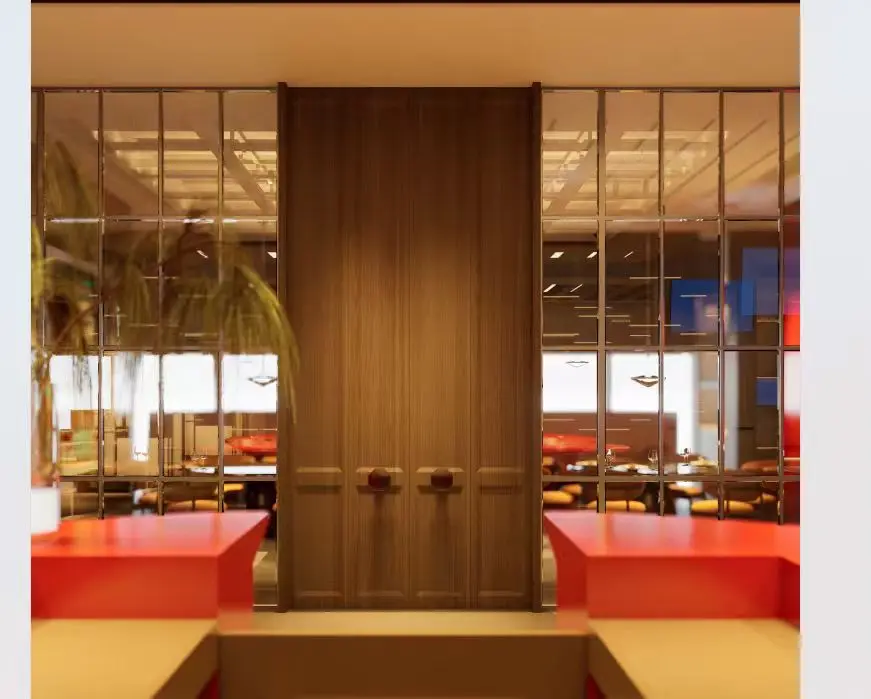
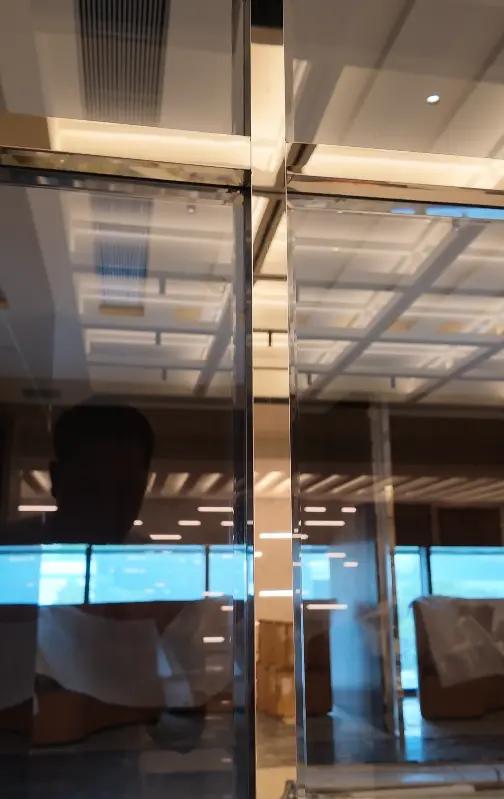
Double-sided glass with a clean mirror frame
The visual intent was retained while the connection detail was reviewed.
Case study 02 · Foshan, China · August 2026
Seven mirror-finished stainless-steel and tempered-glass lobby partitions for a premium restaurant—re-engineered after a physical sample and installed without delay after an unexpected access problem.
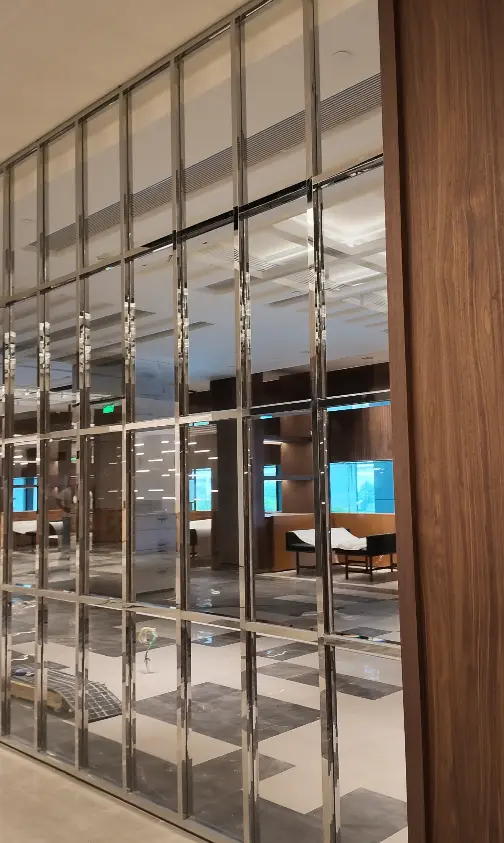 Installed result · client-approved public record
The brief
The client’s original CAD required a stainless-steel frame with glass on both sides. At the same time, the connection between the frame and the glass had to show no sealant on the visible surface.
During engineering review, FABRITERA identified a conflict: with the specified double-glazing arrangement, the sealant line would remain visible. The issue could not be solved by workmanship alone; the construction detail itself had to change.
When appearance depends on the joint, the joint must be engineered before batch production.
Engineering development
The client initially requested a physical sample following the original CAD. The sample confirmed the predicted appearance problem and created a clear basis for revising the final construction.
The visual intent was retained while the connection detail was reviewed.
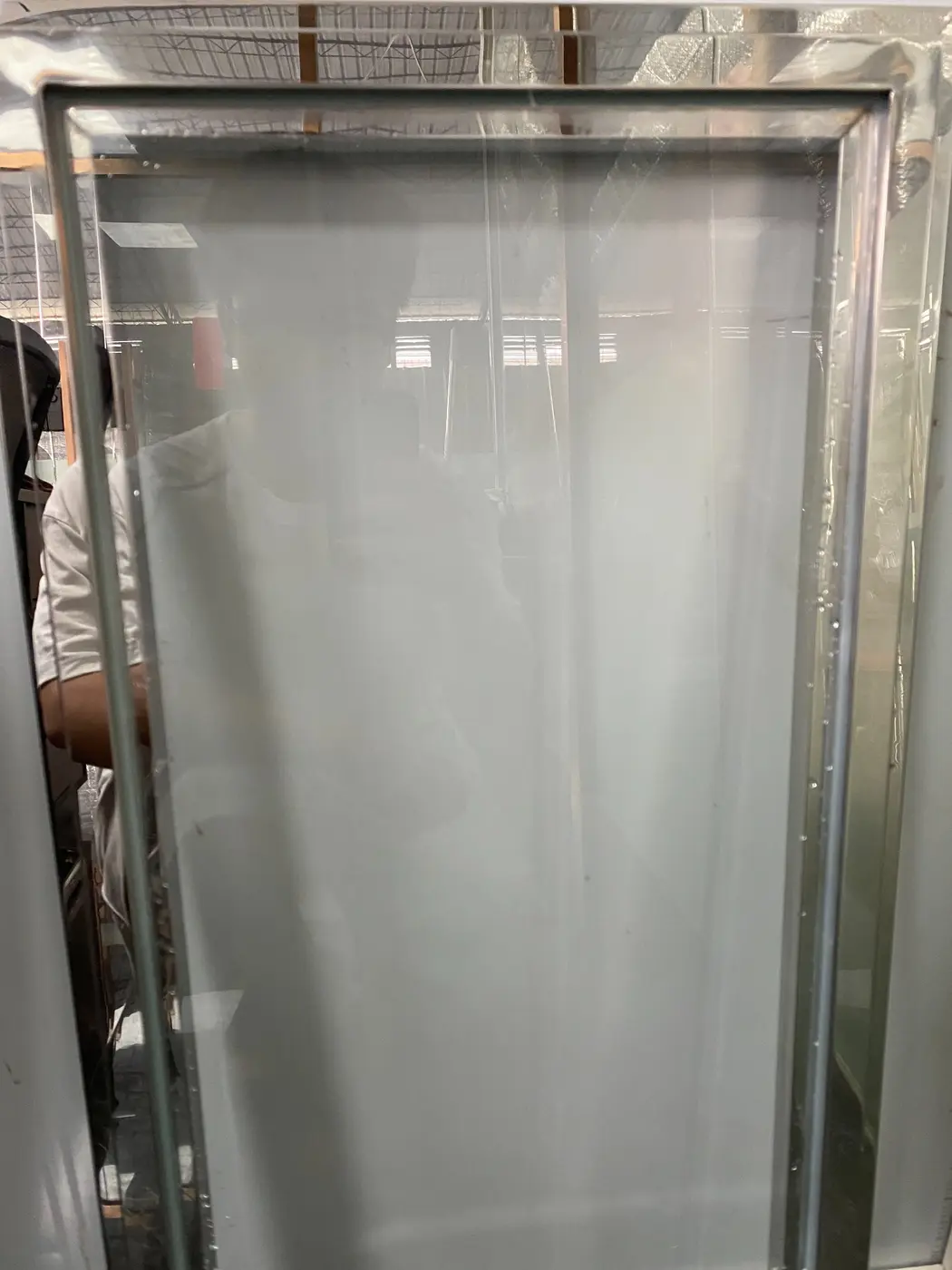
The original arrangement could not satisfy the requested visible finish.
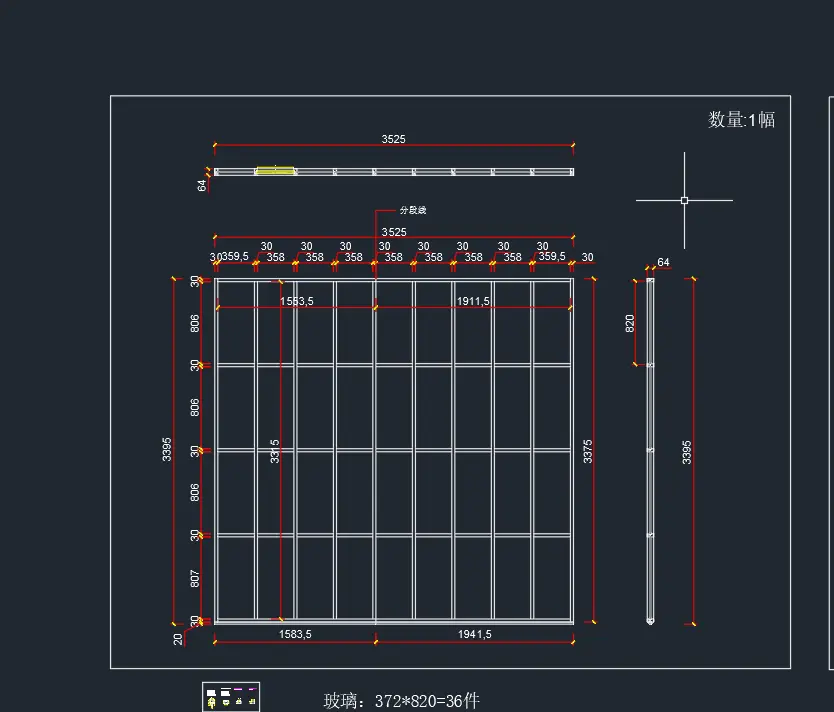
The glass position and retention detail were reworked before production.
The engineering response
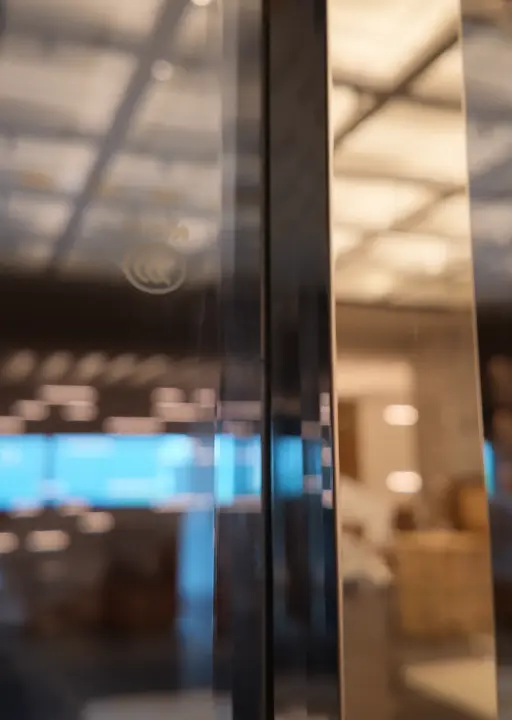
The final solution replaced the original double-glazing arrangement with a single tempered-glass layer, allowing the sealant to sit within the joint rather than remain exposed on the mirror-finished face.
A single tempered-glass layer removed the conflicting outer joint while maintaining the intended transparent partition.
The revised stainless-steel detail created a controlled recess for the connection, protecting the visual continuity of the 8K mirror surface.
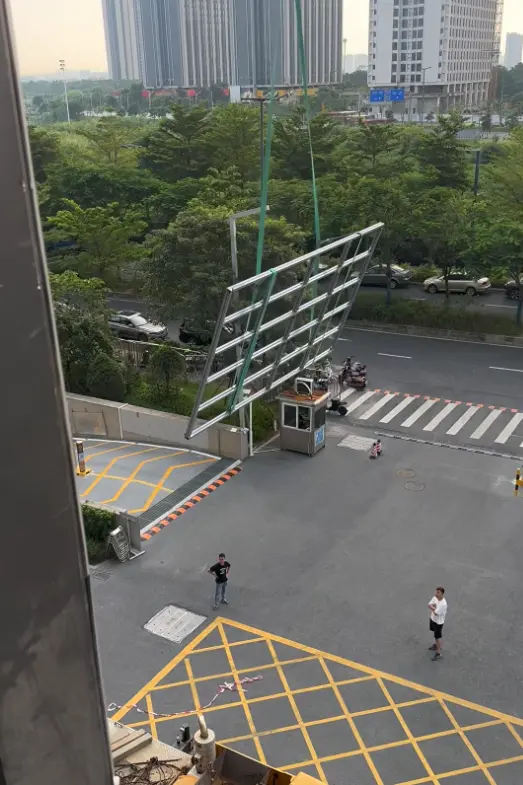
On-site problem solving
When the completed partitions arrived, the available lift capacity had been misunderstood and the units could not pass through the building. The response focused on maintaining safety, sequence and the agreed programme.
Outcome
After approval of the revised construction, the seven partitions were produced in five days. The completed installation retained the intended mirror-and-glass appearance while removing the visible sealant issue confirmed by the first sample.
Have a difficult junction or access condition?
FABRITERA reviews design intent, material interfaces, structural logic, transport and installation access as one project system.